
The Disguise and the Beard
The Mysterious Affair at StylesA theatrical disguise enables the poison purchase, implicates Alfred, and eventually points toward the conspirators’ coordinated attempt to frame others.
increasing Bearing strength in each event
 decreasing
Bearing strength in each eventdecreasingA Distinctive Appearance
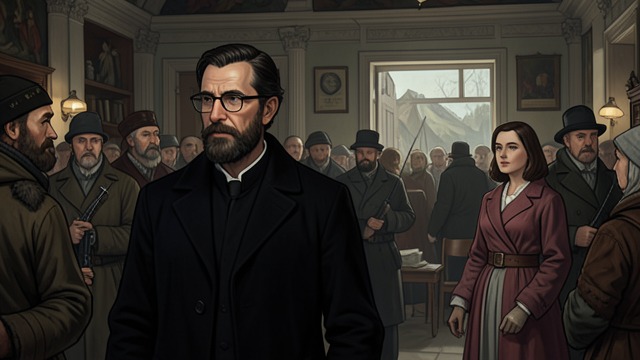
Alfred’s Recognizable Outfit
A Convenient Disguise
Alfred’s black beard, pince-nez, and conspicuous clothing make him recognizable at a distance. The features that draw household criticism also make impersonation unexpectedly simple.
A Vulnerability Becomes a Tool
A witness who has not spoken with Alfred can mistake a costume for a person. Poirot’s attention to this distinction prevents visual identification from becoming unquestioned proof.
A Beard Ordered
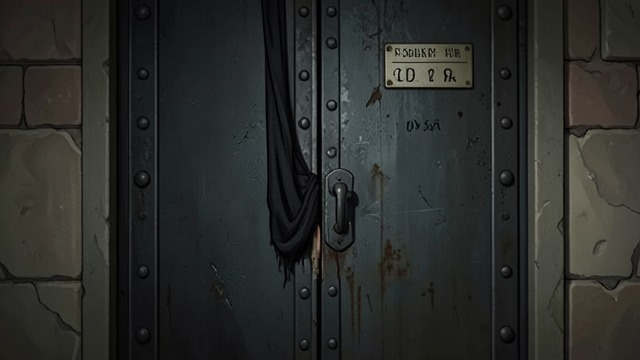
Costume Evidence
A Costumier’s Parcel
A black beard is ordered from a theatrical costumier under the name L. Cavendish. The parcel’s label initially seems to implicate Lawrence, but the address and postmark do not prove who sent it.
A Name in Doubt
The uncertain initial and the absence of a retained order letter leave room for a false attribution. Poirot recognizes the parcel as meaningful without treating its label as a complete answer.
The Chemist’s Visitor
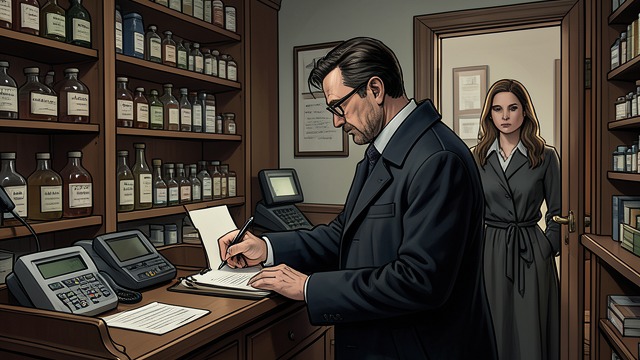
A Borrowed Identity
The Poison Register
A customer resembling Alfred purchases strychnine and signs a register. The transaction becomes one of the strongest apparent links between Alfred and Emily’s death.
Identity Is Unproven
Albert Mace knows the customer only by sight and has never spoken with Alfred. Poirot sees how a beard, glasses, and familiar clothes could produce a confident but mistaken identification.
A Beard in the Attic
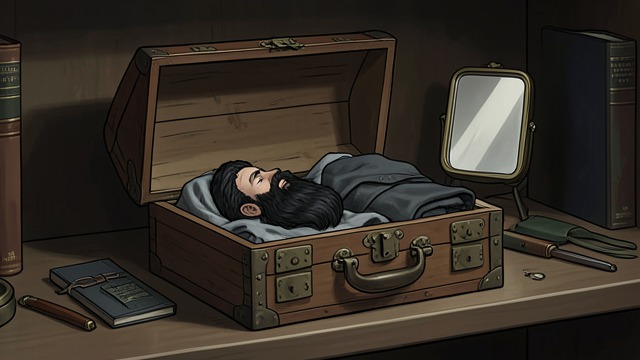
The Costume Reappears
A Chest of Clothes
Poirot searches the dressing-up chest and finds a recently trimmed black beard. The hidden costume confirms that someone had taken pains to reproduce Alfred’s appearance.
Evidence Without a Verdict
The beard supports the impersonation theory but does not by itself identify the wearer. Its value grows only when connected to the false poison-shop identification and the wider plan.
The Partners Identified
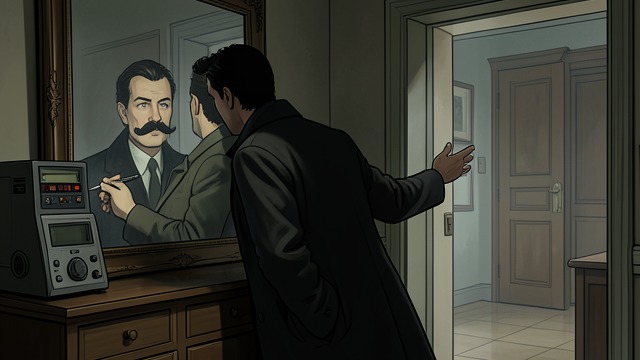
Disguise as Conspiracy
Evelyn’s Part
Poirot concludes that Evelyn went to the chemist disguised as Alfred and wrote his name in a hand meant to misdirect suspicion. The disguise was part of a coordinated scheme, not an isolated trick.
A Plan Overreaches
Alfred’s alibi and the surviving letter expose the larger conspiracy. The costume that seemed to condemn Alfred instead reveals how deliberately the case was constructed.
Before 16 July
Late June
Evening of 16 July
After the inquest
Near the ending
